Dongguan Jingye Spring Machinary Co.,Ltd. Loding...

Servo Spring Machines vs. Mechanical Spring Machines: Which One Fits Your Production

Springs are vital components in a wide range of industries, including automotive, electronics, medical devices, and consumer products. As manufacturing processes evolve, traditional manual and mechanical forming methods are increasingly insufficient to meet the demands for higher precision, efficiency, and flexibility. In this context, manufacturers face a crucial decision between two primary types of spring machines: servo spring machines and mechanical spring machines. This article offers a comprehensive comparison to assist businesses in selecting the most suitable equipment based on their specific production needs.

1. What Is a Servo Spring Machine?


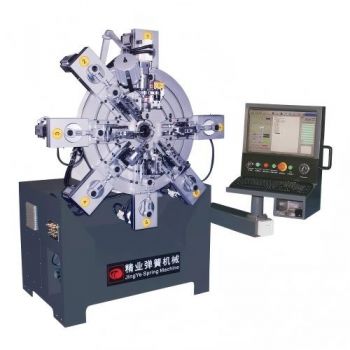
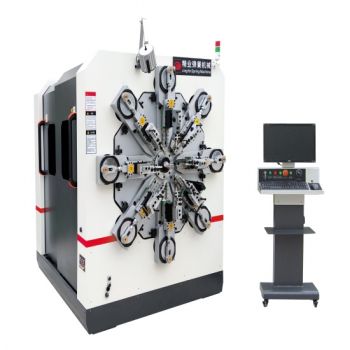
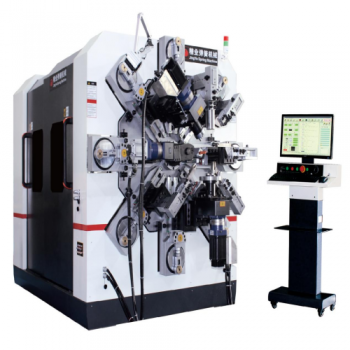
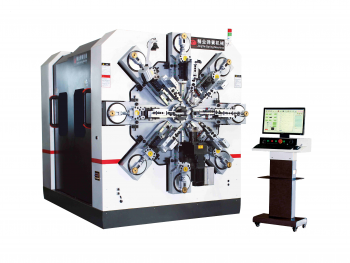
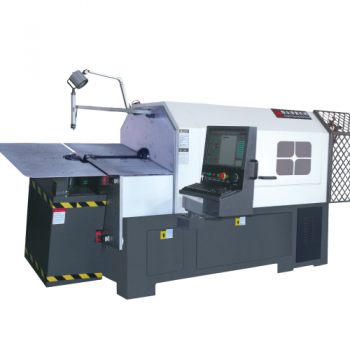
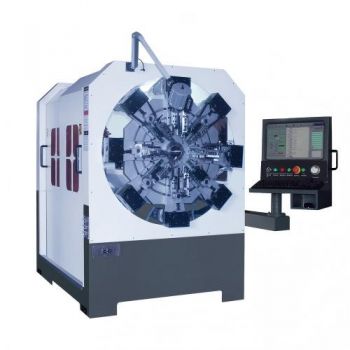
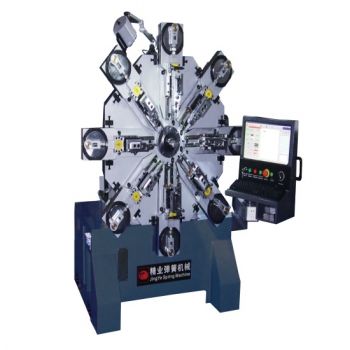
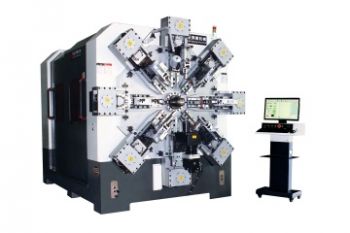
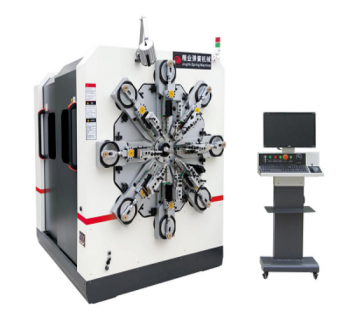
A servo spring machine, often referred to as a CNC spring  machine, utilizes multiple servo motors to control the axes responsible for shaping and cutting the spring. Operated through digital interfaces, these machines allow for precise control over coil diameter, pitch, angle, and the number of turns with minimal manual intervention.

Key Advantages:


High Precision: Tolerances within ±0.02mm

Fully Automated Forming and Cutting

Quick Product Changeovers: Achieved via software input

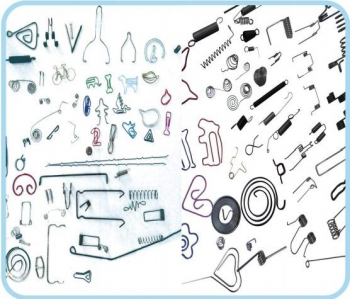
Capability to Produce Complex and Custom-Shaped Springs

Servo machines are particularly suited for industries that require high precision and customization, such as electronics, aerospace, and medical manufacturing.


2. What Is a Mechanical Spring Machine?


Mechanical spring machines employ a cam-driven mechanical system to form springs. Adjustments are made manually by changing cams and modifying physical components.

Key Advantages:


Lower Initial Investment Cost

Faster in High-Volume, Single-Product Scenarios

Easier Maintenance for Experienced Operators


However, mechanical machines are less flexible, require longer downtime for changeovers, and depend heavily on operator skill.


3. Performance Comparison: Precision & Consistency


Precision and consistency are critical in high-end manufacturing. Servo spring machines excel in maintaining consistent coil diameter, pitch, and angle due to computerized control. In contrast, mechanical machines are more prone to inconsistency because of wear and manual setup variation.


Criteria                                                      Servo Machine
Diameter Accuracy                                   ±0.02mm
Coil Consistency                                       Excellent
Complex Shapes                                      Easily supported
Long-run Repeatability                            High


4. Production Efficiency: Speed vs. Changeover Time

While mechanical machines often have a faster raw output rate for a single product, servo machines are more efficient when multiple product types are involved. Their rapid changeover and programmable settings significantly reduce downtime.

Example:

Machine Type                                         Output Speed                                          Changeover Time
Servo Machine                                       150/min                                                    5 min
Mechanical Machine                              200/min                                                    30 min


5. Cost Analysis: Initial Investment vs. Operational Costs


Although servo machines require a higher initial investment, they offer long-term savings in energy, labor, and maintenance. Mechanical machines are less expensive upfront but involve higher ongoing costs.


6. User Experience & Training


Servo machines are equipped with user-friendly touchscreens, standard operating procedures, and simulation functions, making them ideal for younger or less experienced staff. In contrast, mechanical machines rely heavily on manual adjustments and require extensive training for proficiency.


7. Future Trends: Smart Manufacturing & Data Integration


Servo spring machines align with Industry 4.0 trends, which support:

MES/ERP System Integration

Cloud-Based Monitoring and Control

Automatic Data Logging and Analytics


Mechanical machines, on the other hand, cannot be easily upgraded and lack compatibility with modern smart systems.


8. Industry Recommendations: Which Machine Is Right for You?

Business Type                                                                                      Recommended Machine
High-Precision (Medical, Electronics)                                                  Servo Spring Machine
Medium Volume (Automotive, Tools)                                                  Servo + Mechanical Hybrid
High-Volume Low-Cost (Furniture, Toys)                                            Mechanical Spring Machine
Custom Spring Job Shop                                                                    Servo Spring Machine


Conclusion

Choosing between a servo and a mechanical spring machine is not merely a cost-based decision. It is a strategic choice influenced by product complexity, order volume, labor availability, and future business direction. Servo machines offer automation, consistency, and scalability, while mechanical machines provide affordability and simplicity. Ultimately, the right choice depends on your priorities, but investing in value will yield the best long-term returns.

Share