Dongguan Jingye Spring Machinary Co.,Ltd. Loding...

Spring type

What is spring and how many kinds of spring you've ever heard?

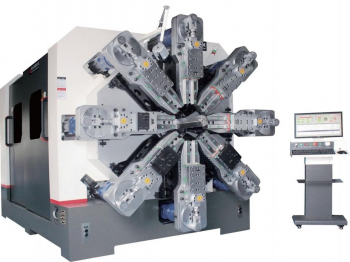
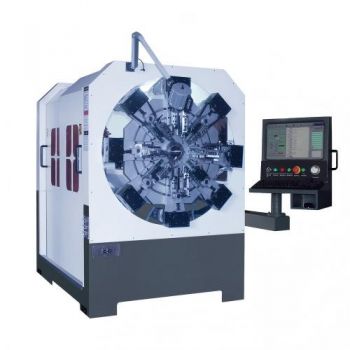
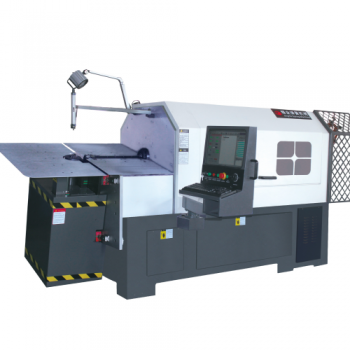
Springs are mechanical devices that pull, push, wind, support, lift, or protect. They are used mainly in mechanical assemblies to provide force—compressive, tensile, or torsion—where they can be used to lift engine valves, open die sets, or hold batteries in place, to name just a few examples. Springs are commonly wound from wire but can be machined from solid steel, built as cylinders, formed as bags, stamped from steel, or assembled from other springs. Ordinary wire springs exhibit a force whose magnitude increases linearly as the spring is pushed, pulled, or twisted. This linear behavior with respect to the displacement distance is known as Hooke’s law motion. Springs are often made to order using dedicated wire winding machines that can wind wire through a given number of turns over a specific length to produce the necessary force constant for the particular application.

 
Different Types of Springs and their Characteristics
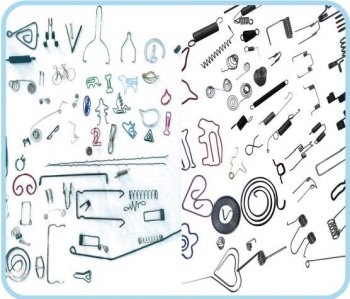
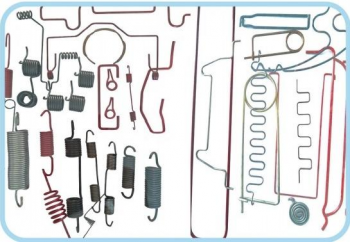
The most common spring types include:

Compression Springs
Extension Springs
Torsion Springs
Constant Force Springs
Belleville Springs
Drawbar Springs
Volute Springs
Garter Springs
Flat Springs
Gas Springs
Air Springs


Types of springs:
Compression Springs
Compression springs are helically coiled wires designed to provide an opposing force when compressed. Under increasing load, the space between coils closes until the spring’s compressed length is reached when the coils touch. Key specifications include the spring rate, helix type, spring ends type, wire diameter, material, various diameters, and free length. Compression springs are used primarily in manufacturing applications, where a variable and opposing force is required between components. The ends can be open (left as cut) or closed (where the last coil is flattened against the adjacent coil to produce a more square end relative to the axis). Squaring the ends may also be achieved by grinding the surface of the last coil. Compression springs, commonly fashioned from wire, can also be machined for particularly demanding applications. Compression springs are often wound to order but are available in stock sizes and as assortment kits.

Extension Springs
Extension springs are helically coiled wires designed to provide an opposing force when stretched. Key specifications include the spring rate, helix type, spring ends type, wire diameter, material, and free and maximum extended lengths. Extension springs are used primarily in manufacturing applications where a variable, opposing force is required between two components. Many sizes, spring rates, and materials are available depending on the holding forces required. The ends are usually formed in the shape of a hook or loop and can also be custom-made. Different types of spring ends are used with extension springs, and many of these are standardized for specific applications, usually formed in the shape of a hook or loop, and can also be custom-made. You can learn more about these spring end options in our related guide on the extension spring end types.

Torsion Springs
Torsion springs are helical or flat spiral coils or strips that apply or resist torque loads. Key specifications include the spring rate, spring end type, wire diameter, material, and torque rating at a known position. Torsion springs are used primarily in manufacturing applications as components for various motion controls. There are two basic types: helical (coil) torsion springs and spiral torsion springs. Helical torsion springs are available in compression or extension springs and act in a radial direction when applying torque rather than axially to produce tension or compression. Spiral torsion springs are wound as concentric spirals, usually from flat or rectangular stock. Many types of torsion springs are available, and applications range from clocks and watches to motion controls in automatic machinery. Torsion springs are often wound to order but are available in stock sizes and as assortment kits.

Constant Force Springs
Constant force springs are tightly wound bands of steel that resemble a roll of tape. A load forces the spring to contract, and when it is removed, the spring rebounds with a constant force. Constant force springs are found in clocks, wind-up toys, and similar devices.

Belleville Springs
Belleville springs, or washers, resemble a slightly tapered disc and, for this reason, are also known as disc springs. They are used in conjunction with fasteners like bolts for pre-tensioning purposes. Typically, a bolt is inserted in a Belleville spring and then attached to a substrate. Belleville springs are available in various material options, including 17-7 PH stainless steel, 301 stainless steel, beryllium copper, H13, Inconel®, phosphor bronze, ZC plated, and ZY plated.

Drawbar Springs
Drawbar springs are coil compression springs incorporating U-shaped wire forms that are inserted for use in extension applications. The drawbar spring combines the tension application of the extension spring with the positive stop feature of the compression spring. Key specifications include the free length, maximum spring deflection, and wire diameter. Drawbar springs are used primarily in applications where a tension-producing spring is required and when the self-limiting feature of compression springs is also needed. A typical use for a drawbar spring is supporting porch swings where the spring cannot be loaded past the point of failure due to the self-limiting property of the compression spring.

Volute Springs
Volute springs are flat metal strips wound together to form helical spirals typically used in compression applications. Key specifications include the intended application, diameter, stroke, material, and end attachment style. Volute springs are mainly used in applications where a compression spring requires a long fatigue life or high spring force repeatability. They come in various sizes depending on the application, force required, and materials. Some volute springs are single-ended, while others are double-ended. An easily recognizable use of the volute spring is the compression spring found in high-quality nail clippers or pruning shears.

Garter Springs
Garter springs are spring coils whose ends are joined to form circular springs, which provide a radial force in components that may contain a variable load. A common use of garter springs is in hydraulic, pneumatic, and radial shaft seals, providing a slight inward force on sealing lips.

Flat Springs
Flat springs are strips or bars of metal, or assemblies of such, formed to produce a repeatable counterforce when compressed or displaced and used for positioning or contacting. Key specifications include the intended application, flat spring type, and spring ends type. Flat springs are mainly used in applications where a repeatable counterforce is required to control motion or load by making contact and applying force. They are available in various sizes, material types, and mounting shapes. Some easily recognizable examples of flat springs are flat battery contacts, vehicle leaf springs, and counterbalances in sliding screen windows.

Gas Springs
Gas springs are mechanical devices consisting of a cylinder and a rod that use the pressure from a pre-charge of nitrogen or other inert gases to produce a force bias on a piston or rod. Key specifications include the intended application, stroke, compressed length, extended length, force, and features. Gas Springs are used primarily in the automobile industry for the raising and/or lowering of hoods or hatches. They are available in various sizes and stroke lengths depending on the application and load requirements. Other applications include seat height adjustments for office chairs.

Air Springs
Air springs are air-pressurized bellow or bladder-type devices of various shapes and sizes and are used for providing actuation, shock absorption, and vibration isolation. Key specifications include the intended application, type, style, physical dimensions, mounting type, and features. Air springs are used primarily in machine applications such as vehicle suspensions for shock absorption and machine mounts for vibration isolation. They are available in various types and sizes based on the load requirements and application. Other uses include lifting, compressing, tilting, etc. Air springs used for vibration isolation are also known as air cushions.

Other Springs
Springs that are assembled into components for particular applications are called spring assemblies. Springs used to protect hydraulic lines are called protective coil springs. Hydraulic springs use special hydraulic fluid in very short-stroke applications and are found in die springs. Box springs support the bed mattresses.


Share