Expert Spring Machine Factory - Recruit Distributor
What is a Spring and How It works in the Industry
Springs, or mechanical coils, are essential mechanical components that play a fundamental role in a wide range of industries, from automotive to medical. Although they may seem simple at first glance, their design and manufacturing require expertise and precision to ensure proper functionality in critical applications. If you are looking for high-quality springs for your products, understanding what a spring is, its functionality, types, and manufacturing processes is key to making informed decisions.
What is a Spring? A spring is an elastic mechanical component designed to store and release energy. It is typically made of metallic materials such as carbon steel or stainless steel, although non-metallic versions exist in various materials for specific applications. Its primary purpose is to absorb forces, cushion impacts, or provide resistance in systems where controlled movement is required.
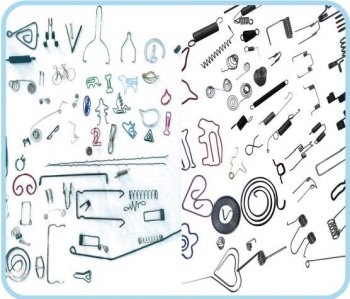
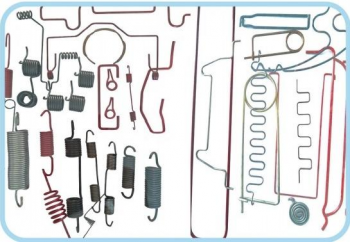
Main Types of Springs Depending on their shape and function, springs can be classified into several categories:
1. Helical Springs
These are the most common and are designed in a spiral shape. They are divided into two main types:
Compression Springs: Compressed under load and used to resist forces, such as in shock absorbers. Tension Springs: Designed to work under tension and used in applications such as automatic doors, brakes, and medical devices. 2. Torsion Springs
These springs operate through rotational motion and store energy when twisted. They are commonly found in mechanisms such as doors, powertrains, and dose regulators in autoinjectors.
3. Spiral Springs
Spiral springs are thin and flat, coiled in a circular shape. They are designed to store rotational energy, making them ideal for clock mechanisms, automatic recoil devices, or tape drive systems. Their structure allows for high energy density in compact spaces.
4. Compression Springs
Compression springs are cylindrical components that compress when a load is applied. They are widely used to absorb forces and cushion impacts, such as in automobile suspensions, mattresses, and industrial machinery. They are designed to withstand high stresses without permanent deformation.
5. Flat Springs
Flat springs are flexible metal strips for applications requiring controlled linear or bending motion. They are common in clip systems, electrical contacts, and precision springs. Their ability to recover their original shape after bending makes them ideal for elastic connections in confined spaces.
6. Tension Springs
Tension springs are designed to work under tensile load, meaning they stretch when force is applied. They are equipped with hooks to facilitate integration into systems requiring controlled tension, such as automatic doors, bicycle brakes, and medical devices.
7. Copper Springs
Copper springs are ideal for applications that require high electrical conductivity or corrosion resistance. Frequently used in electrical connectors, telecommunications components, and electronic devices, they offer a combination of elasticity and conductivity that makes them indispensable in advanced technologies.
8. Special Springs
These are custom-designed for specific needs, such as tiny springs for watches or large springs for heavy machinery.
Applications of Springs in Different Industries Now that you understand what spring is, you should know that they are crucial in numerous sectors due to their versatility and functionality:
Automotive: Used in suspension systems, engines, doors, safety components, clutches, and brakes. Medical: Found in autoinjectors, inhalers, catheters, etc. Electrical: Essential components in connectors and power distributors. Industrial: Assist in presses, robots, and heavy machinery. Power Tools: Provide elastic action in drills, saws, lawnmowers, etc. E-Mobility: Critical in connectors, converters, or inverters for electric or hybrid vehicles. Bicycles: Essential in bicycles and e-bikes.